
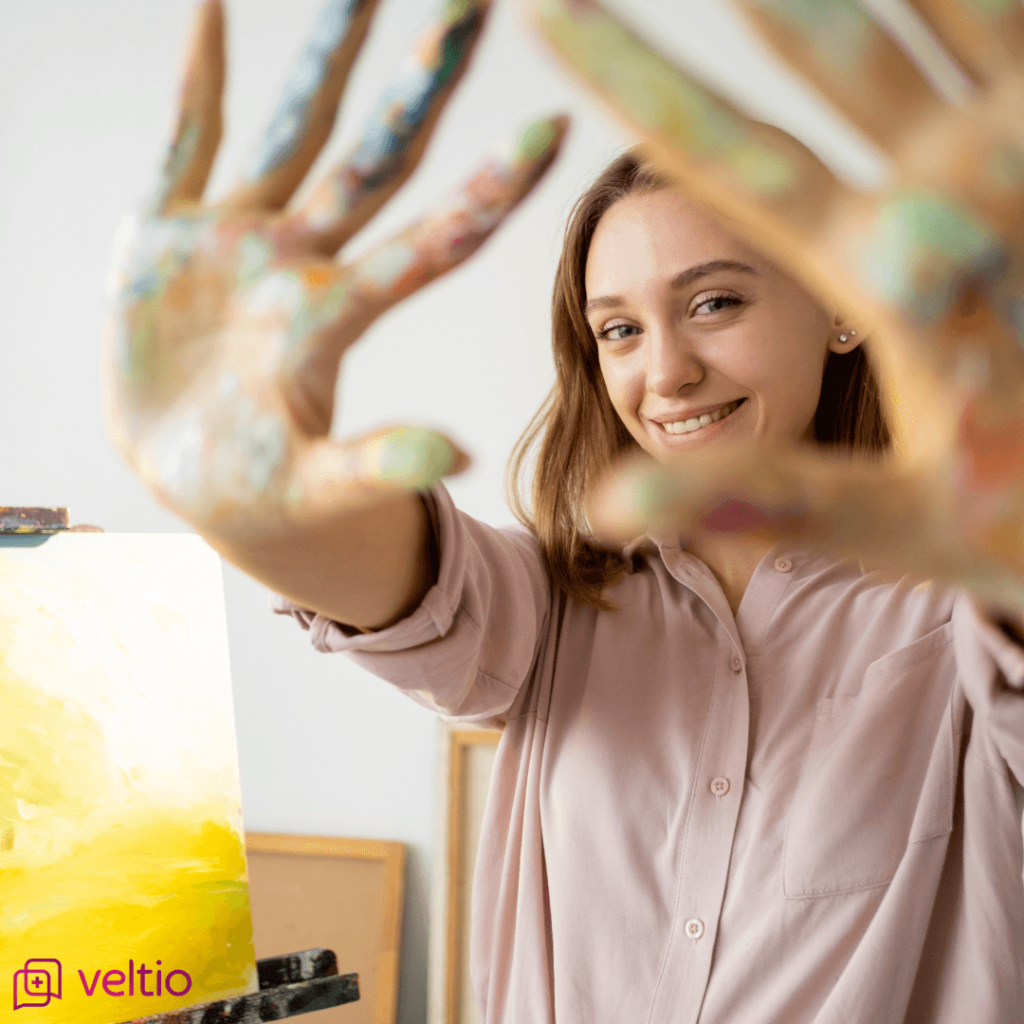
Speaking without Words
When we are young, most of us participate in some form of art or another. Crayons, colored pencils, modeling clay, paint, building blocks, and many other mediums. Indeed, these materials are commonplace in homes with young children. There is freedom given in youth to explore color, creativity, and imagination when language is not as developed as the adults around us. Yet, as we grow older and begin to use words as our main form of expression, many lose the desire or vulnerability for the exploration of art. Events happen that make us want to hide our emotions. Similarly, we are focused on fulfilling the desires of others. With that in mind, consider this article an invitation. A gentle encouragement to return to the transformative power art and self-expression can have in our lives. A remembrance that art therapy was the very first therapy many of us experienced.
Why Art
Many of us struggle with expressing emotion and being in touch with our inner worlds. In cultures overrun with technology, noise, demands, and expectations, practicing art therapy is a way to bring us back to ourselves. Indeed, it is a simple, fun, and oft times powerful tool to boost our mental and emotional well-being. The process of creating art helps us explore feelings, come to terms with emotional conflict, reduce anxiety, and increase our self-image.
Choice is Your Canvas
The most beautiful thing about experiencing art therapy as an adult is how vast and unlimited it is. Whether you choose to embark on your journey into the arts with a certified clinician or choose to go on solo creative adventures, the tools at your disposal are immense. Although it is true some materials at your local art store are quite costly, most of us have access to affordable paints, crayons, pencils, paper, or sketchbooks. Moreover, mixed mediums of all sorts can be dreamed up. For instance, items found in your home or neighborhood. Visiting your local thrift store. Accordingly, getting quiet with yourself and asking the question, what type of medium speaks to you, is a great first step.
Curiosity and Creativity, the Compassion Elixir
As we grow older, many of us believe there are those who are artistic and then there is the rest of us. But what would be the harm in trying a different tack to accessing some of those feelings you’ve been squashing down? If you aren’t seeing a therapist now, this might be fun to give a try. Or, this could supplement your therapeutic process in between sessions. In other words, art therapy is literally for everyone. Even for those of us who loudly declare we can barely draw stick figures!
To begin your art therapy journey, consider the following outline:
- Choose to seek out a trained art therapist, or practice art therapy at home (or both!)
- Decide how often you will spend time participating in your art (daily, weekly, monthly)
- Pick the medium and materials you want to work with (will you paint, sketch, build, sew, glue)
- Prepare your mind and body for the process (stretch, turn off your phone, clear some space, and limit distraction)
- Construct a ritual around the process (perhaps begin with meditation or music, light a candle, or sit in sunlight or moonlight)
- Set an intention (are you trying to access feelings, process trauma, or just freely express what is inside)
- Be so soft with you! Treat yourself with all the love and gentleness and care of a little child
- Refrain from judgment, improvement, or any finish lining of your art. Focus instead on the journey. That’s all. Just the journey. Each moment. Each experience. Nothing more.
No One is Watching
When choosing to begin art therapy at home, there is opportunity to be alone with ourselves without competition or judgment. Not only did we choose the materials we are working with on our own, we will receive no comparisons or critiques from others. Identically, just as inner child work builds a pure connection with our inner selves, so can art and the creative process. In solitude, we are able to sit more deeply into our bodies. This will encourage emotion to flow more freely and without fear of scrutiny. As a result, the act of participating in art therapy becomes a gentle companion on our journey of self-discovery. Through the unique experiences and perspectives we uncover, it fosters acceptance and self-love in a world filled with conditional approval.
Unlocking Emotion
Utilizing the body to be engaged in art accesses different parts of the brain than say, participating in talk therapy. For instance, many individuals are surprised at the sensations that arise when conducting art therapy. It’s almost as if the act of being distracted allows the gentle opening of a vault of emotions. It creates a safe place for difficult memories to bubble up. The swinging open of these proverbial doors allows individuals to express complex feelings without verbalization. Finally, whether through the strokes of a paintbrush, the lines of a pencil, the texture of clay, or the arrangement of found objects, all mediums are a tool for self-expression without the need for eloquence or proper articulation.
Creating Safety
There is little that compares to the safety a competent and caring mental health professional can provide. Yet even the best counselors understand developing a therapeutic relationship and rapport with a client takes time. There is something about the act of interacting with inanimate objects, using our hands, and having our attention on something else while speaking to a therapist that is incredibly conducive to feeling safe to share. Accordingly, not having the burden of eye contact or trying to find just the right word, while making art helps us process difficult emotions and bring out revelations that enrich and inform our lives. For those suffering from acute traumatic experiences, art therapy provides a nonverbal means of communication and allows expression in more impactful and significant ways than words alone could ever do.
More of Our Senses
Creating art allows deeply cathartic experience. Unlike leaving a therapist’s office after a talk therapy session with only thoughts rolling around inside our head. When participating in art therapy, we leave the session with something tangible. Therefore, we have a visual representation of our pent-up emotions of sadness, depression, fear, anxiety, or other. Correspondingly, it allows us to connect with our inner selves using more of our senses. It takes us out of intellectualizing our pain and experience it somatically. Thus, “the best way out, is always through.”
Using Our Hands for Our Hearts
By and large, many of us are caught up living lives disconnected from nature and deep communion with ourselves. Practicing art therapy allows us to use our hands to better feel the tender notions of our hearts. In doing so, it allows us to practice a witnessing of our inner experience. It provides a holding space of what is alive and beng communicated within us in the present moment. Moreover, art therapy allows us to be creators in a culture that encourages so much of us to be consumers. In summary, when we give ourselves the gift of expression, it builds beneath us a path for healing and greater peace. We are all artists of our own story. And our tales are worth telling.