

Maybe Read This Article Later (When You Get A Minute)
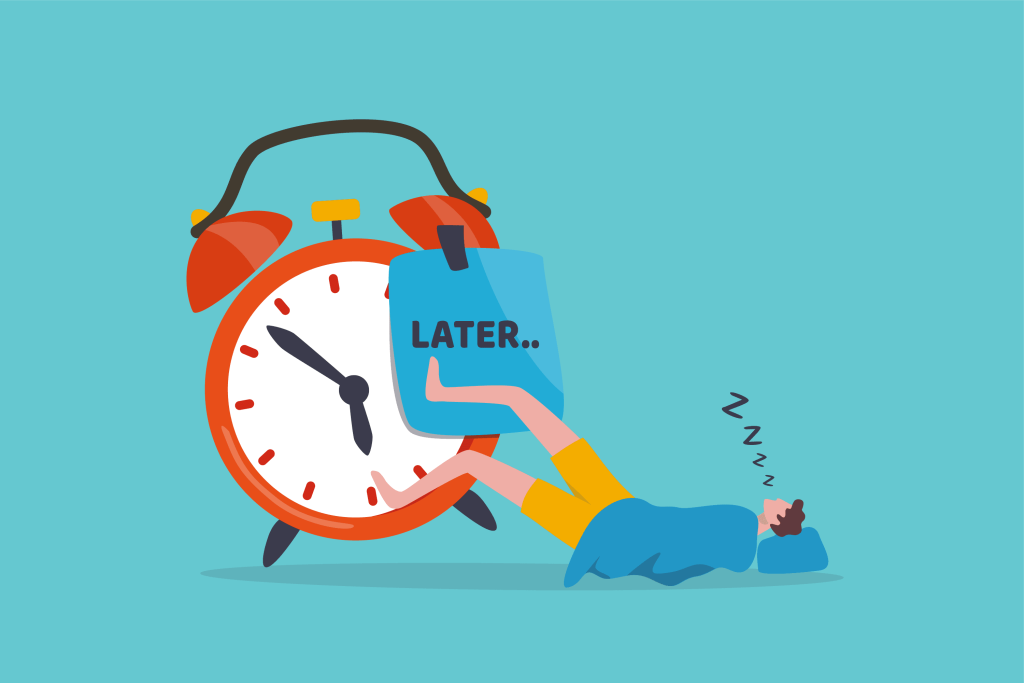
Procrastination is a struggle many of us know all too well. It involves delaying tasks, often until the very last moment, even when we know we should be working on them. Whether we’re putting off writing a paper, completing a work project, or even doing the laundry, procrastination can cause stress and frustration. But why do we procrastinate? Is it just a lack of motivation or self-discipline, or is there something deeper at work? In this article, we’ll explore the psychology behind procrastination, examining its roots, effects, and how we can manage it.
Do We All Procrastinate?
While people often view procrastination as a distinctly human behavior, research reveals it is not limited to us. Many animals, particularly those in the wild, show similar tendencies when delaying action. For example, several animals exhibit behaviors that reflect this tendency to postpone necessary tasks:
Chimpanzees – often show delayed gratification, waiting to act when the timing is more favorable, similar to human procrastination. In some cases, chimpanzees delay gathering tools for activities like termite fishing, even when those tools are available.
Birds – some birds postpone building their nests until resources become scarce. Seabird Puffins, for instance, delay digging or repairing their burrows until the breeding season is well underway. This procrastination increases their risk of losing prime nesting sites, which makes them more vulnerable to predators and environmental hazards, reducing their chances of raising chicks successfully.
Crows – known for their intelligence, often delay tasks when they anticipate a better reward. In one study, crows faced a choice between eating a small piece of food immediately or waiting several minutes for a larger, more desirable piece. The crows consistently chose to wait, showing behavior comparable to humans who procrastinate in hopes of a better outcome.
Squirrels – such as Eastern Gray squirrels, delay gathering nuts until winter begins, relying on their sharp memory to find food later. This strategy can work, but it also carries risks. Waiting too long can lead to increased competition for food or scarcity, jeopardizing their survival through the winter months.
Pigeons – show a tendency to procrastinate in experiments where they could complete an easy task immediately. This ultimately results in more work. Despite knowing that delaying will increase their effort, pigeons often choose to wait, mirroring human procrastination.
Sloths – while often labeled as “lazy,” these animals procrastinate by delaying movement until absolutely necessary, conserving precious energy. This slow-paced behavior, like waiting until the last moment to find food or move locations, helps them survive but also puts them at risk of predation or missing resources, as they can’t react quickly to threats or changes.
These examples show that procrastination is not just a human trait but a complex behavior observed across species, especially those with advanced cognitive abilities. This evolutionary trait offers survival advantages, such as conserving energy or avoiding unnecessary risks until needed.
What’s Going On?
Psychologically, procrastination is a multifaceted behavior shaped by several cognitive and emotional influences. Cognitive psychology offers key insights into why procrastination happens, particularly by identifying a gap between intention and action, often referred to as the intention-action gap. This occurs when individuals intend to complete a task but struggle to initiate or follow through with the necessary actions. One major factor is the tendency to favor short-term pleasure over long-term rewards, a concept well-explained by Temporal Motivation Theory (TMT). According to TMT, we procrastinate when we give more weight to immediate gratification while undervaluing distant outcomes, even if those outcomes are more significant. This explains why people might binge-watch shows instead of starting on a project that has a deadline weeks away. The further away a reward or consequence, the less motivation we feel to act immediately.
Another layer of procrastination is its link to emotional regulation.
When tasks provoke negative emotions—such as anxiety, fear of failure, or self-doubt—our brain seeks ways to avoid that discomfort. Instead of confronting these emotions, we delay the task, opting for immediate relief in the form of distraction. This phenomenon is known as emotional avoidance. Dr. Timothy Pychyl, a leading expert on procrastination, emphasizes that procrastination is not an issue of time management but one of emotion management. For instance, a student might avoid starting an important paper because the task induces anxiety, even though they know delaying will increase stress later.
Moreover, procrastination is not solely about laziness or lack of willpower. It often has deeper emotional roots tied to one’s sense of self-worth. Psychologists have found that chronic procrastinators tend to have higher levels of self-criticism, which perpetuate the cycle of delaying tasks. The fear of not meeting high standards or failing paralyze individuals, making them postpone tasks to protect themselves from feelings of inadequacy. Procrastination then becomes a coping mechanism, albeit a maladaptive one, to manage negative self-perceptions.
It Works For Me!
Interestingly, procrastination isn’t always harmful. It has both pros and cons. Chronic procrastination can lead to missed deadlines, stress, and lower productivity. However, in some cases, delaying a task allows time for incubation, during which new ideas or solutions emerge. Creative individuals, for instance, often step away from problems, which can lead to breakthroughs. The key is understanding when procrastination serves a positive purpose and when it becomes detrimental.
To Reduce Procrastination
Practical steps can help:
1- Break down large tasks into smaller, more manageable pieces to make them feel less overwhelming and reduce the urge to delay.
2 – Set specific deadlines for tasks, even when they don’t have an immediate due date.
3 – Practice mindfulness or meditation to help you be more aware of your emotional state. Get curious about why you put off certain tasks.
4 – Practice self-compassion. Instead of criticizing yourself for procrastinating, acknowledge it and refocus on your goals.
It Will Be Alright (Eventually)
At the end of the day, procrastination is a complex behavior. It affects all of us at some point. While people often view it negatively, it’s important to recognize both its positive and negative aspects. By understanding why we procrastinate, we can manage it more effectively. So, next time you’re putting off a task, don’t be too hard on yourself. Use the moment to reflect, adjust, and tackle your work with renewed motivation. Procrastination is just one part of the human experience, and with the right strategies, we can manage it successfully.